← LearnDeities & energies
In Jyotish a planet is not a rock but a person — with a temperament, a story, a mount, a day and a colour. Before a planet means anything, the tradition says what kind of energy it is: one of three qualities, one of five elements, a tissue of the body. This page is that grammar, and the beings behind it.
The nine, as beings
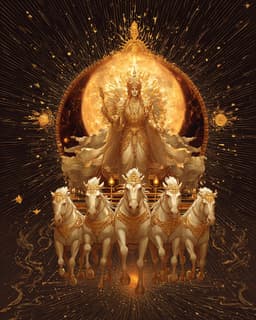
Sūrya · Sun
Wants to be seen truthfully — to stand in the open and act from the centre of oneself.
Sattva · fire · Sunday · East · copper red · bone
- Presiding ·
- Agni, fire; in practice, Sūrya himself, at sunrise. Parāśara names Agni; the daily practice is to the rising Sun directly.
- Nature ·
- A mild malefic — a king’s heat, not a soldier’s. Metal gold, stone ruby, taste pungent.
- In art ·
- Rides a one-wheeled chariot drawn by seven horses, a lotus in each hand, dawn (Aruṇa) at the reins; the face is a disc of light.
japā-kusuma-saṅkāśaṃ kāśyapeyaṃ mahā-dyutim | tamo’riṃ sarva-pāpa-ghnaṃ praṇato’smi divākaram ||
Red as the hibiscus, child of Kaśyapa, of vast radiance, enemy of darkness, destroyer of every fault — I bow to the maker of the day.
Seed: Oṃ hrāṃ hrīṃ hrauṃ saḥ sūryāya namaḥ
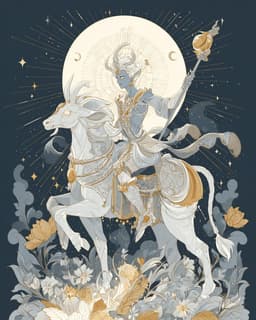
Chandra · Moon
Wants to be held — to feel, reflect, and be nourished before it nourishes.
Sattva · water · Monday · North-west · white · blood
- Presiding ·
- Varuṇa, the waters; in practice, Chandra, and Pārvatī (Gaurī) as the Moon’s gentle guardian. Parāśara names the waters; Monday practice turns to the Moon itself and to the goddess.
- Nature ·
- A benefic when waxing, gentler when waning. Metal silver, stone pearl, taste salty.
- In art ·
- Pale and serene, usually on a chariot drawn by an antelope or ten white horses, holding a mace and a lotus; a crescent marks him.
dadhi-śaṅkha-tuṣārābhaṃ kṣīrodārṇava-sambhavam | namāmi śaśinaṃ somaṃ śambhor mukuṭa-bhūṣaṇam ||
White as curd, as conch, as frost, born of the ocean of milk — I bow to the hare-marked Moon, Soma, the jewel in Śiva’s crown.
Seed: Oṃ śrāṃ śrīṃ śrauṃ saḥ candrāya namaḥ
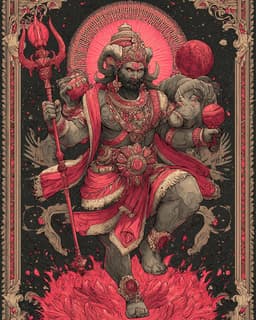
Maṅgala · Mars
Wants a worthy aim — energy with somewhere to go, and something to protect.
Tamas · fire · Tuesday · South · red · marrow
- Presiding ·
- Subrahmaṇya (Kārttikeya), commander of the gods; in practice, Kārttikeya, and Hanumān for steadiness. Parāśara names Kārttikeya; the Hanumān Chālīsā on Tuesdays is the folk practice.
- Nature ·
- A malefic — force, which is neither good nor bad until aimed. Metal copper, stone red coral, taste bitter.
- In art ·
- Red-bodied, four-armed, with a spear, mace and trident; usually seated on a ram.
dharaṇī-garbha-sambhūtaṃ vidyut-kānti-sama-prabham | kumāraṃ śakti-hastaṃ ca maṅgalaṃ praṇamāmy aham ||
Born of the Earth’s womb, bright as lightning, the youth with the spear in his hand — I bow to Maṅgala.
Seed: Oṃ krāṃ krīṃ krauṃ saḥ bhaumāya namaḥ
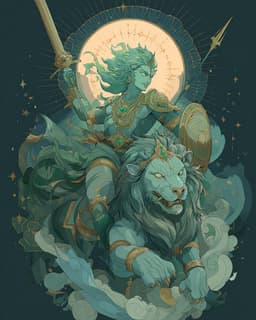
Budha · Mercury
Wants to understand and to be understood — to name, count, connect and trade.
Rajas · earth · Wednesday · North · green · skin
- Presiding ·
- Viṣṇu, the preserver; in practice, Viṣṇu.
- Nature ·
- A benefic on its own; it takes the colour of whoever it sits with. Metal brass, stone emerald, taste mixed.
- In art ·
- Green as new growth, holding a sword, shield, mace and book; most often on a lion, in some regions a horse.
priyaṅgu-kalikā-śyāmaṃ rūpeṇāpratimaṃ budham | saumyaṃ saumya-guṇopetaṃ taṃ budhaṃ praṇamāmy aham ||
Dark as the priyaṅgu bud, of unmatched form, gentle, son of the Moon and gentle in nature — I bow to Budha.
Seed: Oṃ brāṃ brīṃ brauṃ saḥ budhāya namaḥ
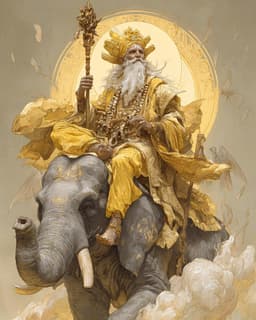
Bṛhaspati (Guru) · Jupiter
Wants to grow something — knowledge, a household, a student, a promise kept.
Sattva · ether · Thursday · North-east · yellow · fat
- Presiding ·
- Indra, king of the gods; in practice, Bṛhaspati, and Dakṣiṇāmūrti — Śiva as the silent teacher. Parāśara names Indra; the living practice honours the teacher.
- Nature ·
- The great benefic — whatever it touches, it expands. Metal gold, stone yellow sapphire, taste sweet.
- In art ·
- Golden and seated, a book and rosary in hand, unhurried; usually on an elephant, sometimes a swan.
devānāṃ ca ṛṣīṇāṃ ca guruṃ kāñcana-sannibham | buddhi-bhūtaṃ tri-lokeśaṃ taṃ namāmi bṛhaspatim ||
Teacher of gods and sages, gold in colour, intelligence itself, lord of the three worlds — I bow to Bṛhaspati.
Seed: Oṃ grāṃ grīṃ grauṃ saḥ gurave namaḥ
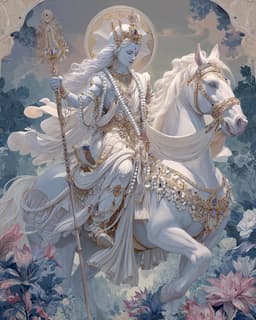
Śukra · Venus
Wants beauty made deliberately — love, art, comfort, and the counsel of the heart.
Rajas · water · Friday · South-east · white · reproductive essence
- Presiding ·
- Śacī (Indrāṇī), the queen of the gods; in practice, Lakṣmī, on Fridays. Parāśara names Śacī; Friday practice turns to Lakṣmī.
- Nature ·
- A benefic — the pleasure that keeps life worth the trouble. Metal silver, stone diamond, taste sour.
- In art ·
- White-robed, a staff and rosary in hand, sometimes one-eyed (he gave the other away); usually on a white horse.
hima-kunda-mṛṇālābhaṃ daityānāṃ paramaṃ gurum | sarva-śāstra-pravaktāraṃ bhārgavaṃ praṇamāmy aham ||
White as snow, jasmine and lotus-stem, supreme teacher of the daityas, expounder of every science — I bow to the son of Bhṛgu.
Seed: Oṃ drāṃ drīṃ drauṃ saḥ śukrāya namaḥ
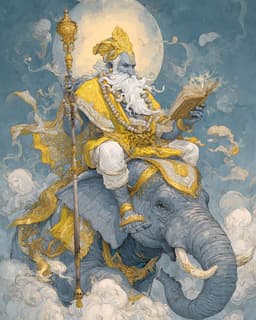
Śani · Saturn
Wants patience and duty — the work done properly, especially when no one is watching.
Tamas · air · Saturday · West · dark blue · sinew and nerve
- Presiding ·
- Brahmā, the creator; in practice, Śani himself, and Hanumān as the classical shelter in his seasons. Parāśara names Brahmā; Saturday practice is oil, sesame, service — and the Chālīsā.
- Nature ·
- A malefic — slow, and honest about what takes time. Metal iron, stone blue sapphire, taste astringent.
- In art ·
- Dark, thin, with an iron staff or arrow, a slow gait; rides a crow, in some images a vulture or buffalo.
nīlāñjana-samābhāsaṃ ravi-putraṃ yamāgrajam | chāyā-mārtaṇḍa-sambhūtaṃ taṃ namāmi śanaiścaram ||
Dark as blue collyrium, son of the Sun, elder brother of Yama, born of Chāyā and Mārtaṇḍa — I bow to the slow-mover.
Seed: Oṃ prāṃ prīṃ prauṃ saḥ śanaiścarāya namaḥ
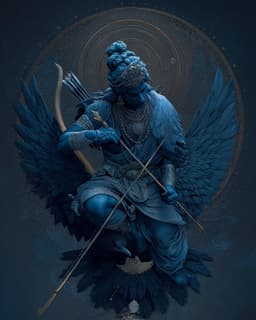
Rāhu · Rahu
Wants more — the unfamiliar, the foreign, the thing everyone said was out of reach.
Tamas · Saturday · South-west · smoke
- Presiding ·
- Not in Parāśara’s list — the serpent (Sarpa) by convention; in practice, Durgā, the invincible mother. The nodes are shadows, not bodies; their deities are the later tradition’s.
- Nature ·
- A malefic — hunger, and the outsider’s genius. Metal lead, stone hessonite, taste none.
- In art ·
- A severed head, dark, often crowned, on a serpent’s coils or a lion; sometimes only the head, mouth open toward the Sun and Moon.
ardha-kāyaṃ mahā-vīryaṃ candrāditya-vimardanam | siṃhikā-garbha-sambhūtaṃ taṃ rāhuṃ praṇamāmy aham ||
Half a body, of great valour, the one who swallows the Moon and Sun, born of Siṃhikā’s womb — I bow to Rāhu.
Seed: Oṃ bhrāṃ bhrīṃ bhrauṃ saḥ rāhave namaḥ
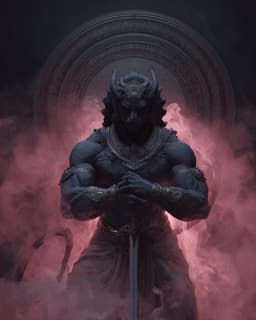
Ketu · Ketu
Wants less — to let go, to finish, to see through the thing rather than at it.
Tamas · Tuesday · no fixed direction · grey
- Presiding ·
- Not in Parāśara’s list — Citragupta by some conventions; in practice, Gaṇeśa, lord of thresholds. The nodes are shadows, not bodies; their deities are the later tradition’s.
- Nature ·
- A malefic — release, and the wisdom of what has already been lived. Metal mixed metals, stone cat’s eye, taste none.
- In art ·
- The headless body — a serpent’s head on a human torso, grey or smoke-coloured, with a flag; rides a vulture or an eagle.
palāśa-puṣpa-saṅkāśaṃ tārakā-graha-mastakam | raudraṃ raudrātmakaṃ ghoraṃ taṃ ketuṃ praṇamāmy aham ||
Red as the palāśa flower, head of the stars and planets, fierce, fierce in nature, terrible — I bow to Ketu.
Seed: Oṃ srāṃ srīṃ srauṃ saḥ ketave namaḥ
The three qualities · guṇa
Clarity · Sattva — light, balance, knowing
The Sun, the Moon and Jupiter carry sattva — the quality that illuminates. Where they are strong, a life tends toward seeing clearly and meaning well.
Motion · Rajas — desire, activity, exchange
Mercury and Venus carry rajas — the quality that moves and wants. It is the energy of commerce, art, appetite and talk; nothing gets made without it.
Weight · Tamas — inertia, endurance, depth
Mars, Saturn and the nodes carry tamas — the quality that resists and endures. It is not the villain: it is mass, stamina, and the ability to stay.
The five elements · tattva
Fire · Agni · tejas — will, heat, transformation
The Sun and Mars are fire; Aries, Leo and Sagittarius are its signs. Fire converts — food into strength, intention into act.
Earth · Pṛthvī — form, substance, the practical
Mercury is earth; Taurus, Virgo and Capricorn are its signs. Earth gives things a body — a plan, a price, a schedule.
Air · Vāyu — movement, relation, thought
Saturn is air; Gemini, Libra and Aquarius are its signs. Air connects and disperses — ideas, people, and the space between them.
Water · Jala — feeling, memory, flow
The Moon and Venus are water; Cancer, Scorpio and Pisces are its signs. Water holds and remembers — love, mood, and what the body knows.
Ether · Ākāśa — space, meaning, the room for everything
Jupiter is ether — the space the other four move in. No sign is ether’s alone; it is the sky every sign sits in.
Parāśara assigns each planet a tissue: the Sun the bones, the Moon the blood, Mars the marrow, Mercury the skin, Jupiter the fat, Venus the reproductive essence, Saturn the sinews and nerves. The app reads these as arenas of the body’s life — where a planet’s weather is felt — never as diagnoses.
The devas behind the planets
Parāśara names a presiding deity for each planet; the living tradition often turns to a different, dearer form.
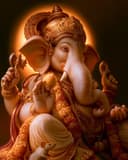
Gaṇeśa · Lord of thresholds
Invoked before every beginning, and the classical form for Ketu — the one who removes the obstacle, or reveals that it was the teacher.
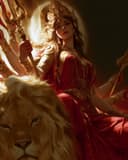
Durgā · The invincible mother
The refuge in Rāhu’s seasons — protection when the thing being faced feels undefeatable.
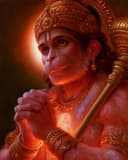
Hanumān · Strength in devotion
The shelter in Saturn’s and Mars’s hard weather: strength that is spent for someone else, and fear that gets smaller when it is read aloud.
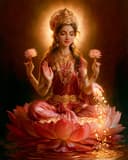
Lakṣmī · Goddess of fortune
Venus’s living form — the one who enters a home that has been made ready: order, a lit lamp, kind speech.
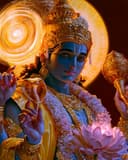
Viṣṇu · The preserver
Mercury’s presiding deity — steadiness, rhythm, the verse kept daily; what preserves is what keeps returning.
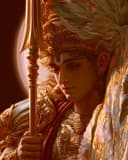
Kārttikeya · Commander of the divine armies
Mars’s presiding deity — one aim chosen, scattered fronts closed, the spear pointed at what actually matters.

Pārvatī · The mountain’s daughter
The Moon’s gentle guardian — care of the patient kind, the practice that steadies a mind that moves in phases.
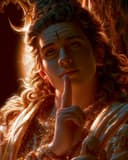
Dakṣiṇāmūrti · The silent teacher
Jupiter’s deepest form — Śiva teaching by silence under the banyan; the knowing that arrives when the asking stops.
Presiding deities, guṇas, elements, genders, directions and tissues follow Bṛhat Parāśara Horā Śāstra ch. 3; the nodes are not in Parāśara’s lists and carry the later convention. The Navagraha Stotra is Vyāsa’s. Mounts and attributes vary by region. Practices are how tradition meets a being — an invitation, never a prescription.
Which of these beings preside over you? The app composes your altar from your chart — ruler, birth star, the chapter you are living, and today.
Cast your free chart →